Robotic · Robotic
Advancements in Computer Vision Robotics
Computer vision robotics combines robotic systems with computer vision technology to enable machines to process and interpret visual information from their environment. This field …

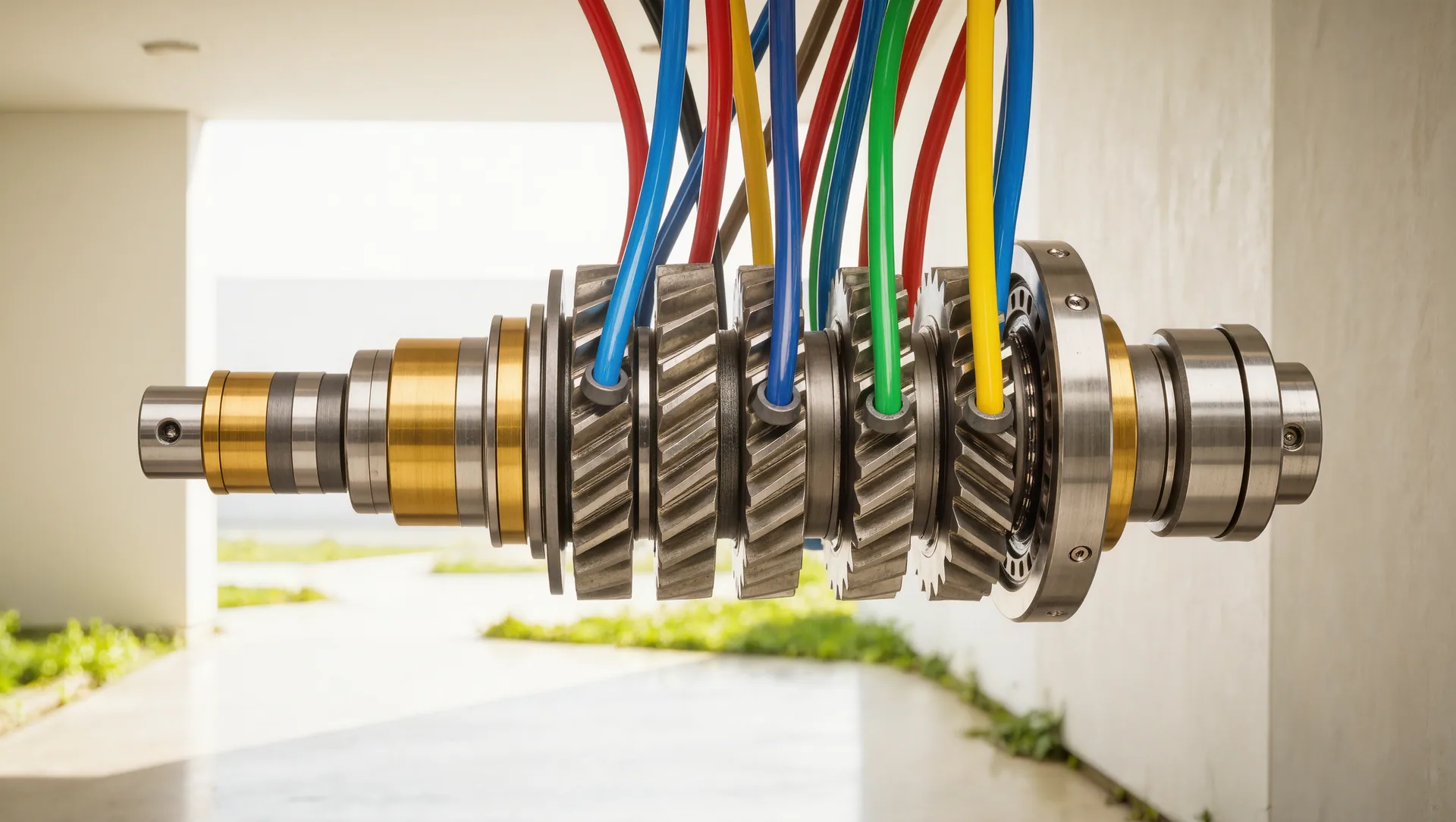
Computer vision robotics combines robotic systems with computer vision technology to enable machines to process and interpret visual information from their environment. This field utilizes cameras, sensors, and computational algorithms to allow robots to perceive, analyze, and respond to visual stimuli in real-time. The technology enables robots to perform object recognition, spatial navigation, quality inspection, and autonomous decision-making based on visual data input.
The integration of computer vision into robotic systems provides several measurable advantages across industrial applications. In manufacturing, computer vision-enabled robots demonstrate improved precision in assembly tasks, with error rates reduced by up to 90% compared to traditional automated systems. In autonomous vehicles, computer vision systems process visual data to enable navigation, obstacle detection, and traffic sign recognition.
Additional applications include medical robotics for surgical assistance, agricultural robots for crop monitoring, and warehouse automation for inventory management. Current implementations of computer vision robotics are operational across multiple sectors. Manufacturing facilities employ vision-guided robots for quality control and parts assembly.
Logistics companies utilize computer vision for automated sorting and package handling. The technology has progressed from experimental applications to commercially viable solutions, with market adoption increasing annually as processing capabilities improve and costs decrease.
The evolution of computer vision technology has been marked by significant milestones that have propelled its integration into robotics. Initially, computer vision was limited to basic image processing techniques that could only handle simple tasks like edge detection and color segmentation. However, as computational power increased and algorithms became more sophisticated, the field began to expand rapidly.
The introduction of machine learning techniques in the late 20th century allowed for more complex image analysis, paving the way for the development of robust computer vision systems. In recent years, the advent of deep learning has revolutionized computer vision technology. Neural networks, particularly convolutional neural networks (CNNs), have enabled machines to learn from vast amounts of visual data, improving their ability to recognize patterns and objects with remarkable accuracy.
This evolution has not only enhanced the capabilities of robots but has also made computer vision more accessible to developers and researchers, leading to a surge in innovative applications across various sectors.
Computer vision robotics has found applications in numerous fields, each benefiting from the ability of machines to perceive and interpret visual information. In manufacturing, robots equipped with computer vision can perform quality control by inspecting products for defects, ensuring that only items meeting strict standards reach consumers. In agriculture, drones equipped with computer vision can monitor crop health, assess soil conditions, and optimize resource usage, leading to more sustainable farming practices.
Another significant application is in healthcare, where robotic systems can assist in surgeries by providing surgeons with enhanced visualization and precision. Additionally, autonomous vehicles rely heavily on computer vision to navigate safely through complex environments, recognizing obstacles and making real-time decisions. These applications illustrate the versatility of computer vision robotics and its potential to transform industries by improving efficiency and accuracy.
Deep learning has had a profound impact on computer vision robotics, fundamentally changing how machines process visual information. By leveraging large datasets and powerful computational resources, deep learning algorithms can learn intricate features from images without requiring extensive manual feature engineering. This capability allows robots to achieve higher levels of accuracy in object recognition and classification tasks.
Moreover, deep learning has enabled real-time processing of visual data, which is crucial for applications such as autonomous navigation and robotic manipulation. Robots can now analyze their surroundings instantaneously, making decisions based on current conditions rather than relying on pre-programmed responses.
The integration of computer vision and artificial intelligence (AI) in robotics represents a significant advancement in the field. While computer vision provides the sensory input necessary for robots to perceive their environment, AI algorithms enable them to interpret this data and make intelligent decisions. This synergy allows robots to not only see but also understand what they are seeing.
For instance, in smart manufacturing environments, AI-driven robots can analyze visual data from their surroundings to optimize production processes dynamically. They can identify bottlenecks, predict maintenance needs, and adjust operations accordingly. This integration enhances operational efficiency and reduces downtime, ultimately leading to cost savings for businesses.
Recent advancements in object recognition and tracking have significantly improved the capabilities of computer vision robotics. Modern algorithms can now identify and track multiple objects simultaneously with high precision. This capability is essential for applications such as autonomous vehicles, where understanding the position and movement of other vehicles and pedestrians is critical for safety.
Additionally, advancements in 3D object recognition have enabled robots to perceive depth and spatial relationships more effectively. This enhanced understanding allows robots to interact with objects in a more human-like manner, facilitating tasks such as picking and placing items in warehouses or performing complex assembly operations in manufacturing settings.
Improvements in 3D mapping and reconstruction techniques have further expanded the capabilities of computer vision robotics. Robots can now create detailed three-dimensional maps of their environments using various sensors, including cameras and LiDAR systems. These maps provide a comprehensive understanding of spatial layouts, enabling robots to navigate complex terrains more effectively.
The ability to reconstruct 3D environments also enhances robotic interaction with objects within those spaces. For example, service robots can use 3D maps to navigate through homes or offices while avoiding obstacles and efficiently reaching their destinations. This level of spatial awareness is crucial for applications ranging from delivery services to home assistance.
Enhanced autonomous navigation is one of the most significant benefits of integrating computer vision into robotics. This capability is particularly important for autonomous vehicles, which must respond quickly to changing conditions on the road.
Moreover, advancements in simultaneous localization and mapping (SLAM) techniques have improved the accuracy of navigation systems. Robots can now create maps while simultaneously tracking their position within those maps, enabling them to operate effectively even in unfamiliar environments. This level of autonomy opens up new possibilities for applications such as delivery drones and robotic vacuum cleaners.
Despite the remarkable advancements in computer vision robotics, several challenges and limitations remain. One significant challenge is the need for high-quality training data. Deep learning algorithms require vast amounts of labeled data to learn effectively, which can be time-consuming and expensive to obtain.
Additionally, variations in lighting conditions, occlusions, and environmental changes can affect the performance of computer vision systems. Another limitation is the computational power required for real-time processing of visual data. While advancements in hardware have improved this aspect, many robotic applications still face constraints related to processing speed and energy consumption.
Addressing these challenges will be crucial for further advancements in the field.
The future of computer vision robotics is promising, with several trends poised to shape its development. One trend is the increasing use of edge computing, which allows data processing to occur closer to where it is generated rather than relying solely on cloud-based systems. This shift will enable faster decision-making and reduce latency in applications such as autonomous vehicles.
Another trend is the growing emphasis on explainable AI (XAI) within computer vision robotics. As robots become more autonomous, understanding their decision-making processes will be essential for building trust with users. Researchers are focusing on developing models that provide insights into how robots interpret visual data and make decisions based on that information.
In conclusion, computer vision robotics plays a pivotal role in shaping the future of automation and intelligent systems. By enabling machines to perceive and understand their environment through visual data, this technology enhances efficiency across various industries while opening new avenues for innovation. As advancements continue in deep learning, object recognition, navigation, and integration with AI, we can expect even greater capabilities from robotic systems.
The challenges that remain will require ongoing research and development efforts; however, the potential benefits are immense. As we move forward into an increasingly automated world, computer vision robotics will undoubtedly be at the forefront of this transformation, driving progress and redefining what is possible in robotics.
The integration of computer vision into robotic systems provides several measurable advantages across industrial applications. In manufacturing, computer vision-enabled robots demonstrate improved precision in assembly tasks, with error rates reduced by up to 90% compared to traditional automated systems. In autonomous vehicles, computer vision systems process visual data to enable navigation, obstacle detection, and traffic sign recognition.
Additional applications include medical robotics for surgical assistance, agricultural robots for crop monitoring, and warehouse automation for inventory management. Current implementations of computer vision robotics are operational across multiple sectors. Manufacturing facilities employ vision-guided robots for quality control and parts assembly.
Logistics companies utilize computer vision for automated sorting and package handling. The technology has progressed from experimental applications to commercially viable solutions, with market adoption increasing annually as processing capabilities improve and costs decrease.
Key Takeaways
- Computer vision robotics has evolved significantly, enhancing robots' ability to perceive and interact with their environment.
- Deep learning has greatly improved object recognition, tracking, and autonomous navigation capabilities in robotics.
- Integration of AI with computer vision enables more intelligent and adaptive robotic systems.
- Despite advancements, challenges like processing complexity and environmental variability remain.
- Future trends point toward more sophisticated 3D mapping, real-time processing, and broader applications across industries.
Evolution of Computer Vision Technology
The evolution of computer vision technology has been marked by significant milestones that have propelled its integration into robotics. Initially, computer vision was limited to basic image processing techniques that could only handle simple tasks like edge detection and color segmentation. However, as computational power increased and algorithms became more sophisticated, the field began to expand rapidly.
The introduction of machine learning techniques in the late 20th century allowed for more complex image analysis, paving the way for the development of robust computer vision systems. In recent years, the advent of deep learning has revolutionized computer vision technology. Neural networks, particularly convolutional neural networks (CNNs), have enabled machines to learn from vast amounts of visual data, improving their ability to recognize patterns and objects with remarkable accuracy.
This evolution has not only enhanced the capabilities of robots but has also made computer vision more accessible to developers and researchers, leading to a surge in innovative applications across various sectors.
Applications of Computer Vision Robotics
Computer vision robotics has found applications in numerous fields, each benefiting from the ability of machines to perceive and interpret visual information. In manufacturing, robots equipped with computer vision can perform quality control by inspecting products for defects, ensuring that only items meeting strict standards reach consumers. In agriculture, drones equipped with computer vision can monitor crop health, assess soil conditions, and optimize resource usage, leading to more sustainable farming practices.
Another significant application is in healthcare, where robotic systems can assist in surgeries by providing surgeons with enhanced visualization and precision. Additionally, autonomous vehicles rely heavily on computer vision to navigate safely through complex environments, recognizing obstacles and making real-time decisions. These applications illustrate the versatility of computer vision robotics and its potential to transform industries by improving efficiency and accuracy.
Impact of Deep Learning on Computer Vision Robotics
Deep learning has had a profound impact on computer vision robotics, fundamentally changing how machines process visual information. By leveraging large datasets and powerful computational resources, deep learning algorithms can learn intricate features from images without requiring extensive manual feature engineering. This capability allows robots to achieve higher levels of accuracy in object recognition and classification tasks.
Moreover, deep learning has enabled real-time processing of visual data, which is crucial for applications such as autonomous navigation and robotic manipulation. Robots can now analyze their surroundings instantaneously, making decisions based on current conditions rather than relying on pre-programmed responses.
Integration of Computer Vision and Artificial Intelligence in Robotics
The integration of computer vision and artificial intelligence (AI) in robotics represents a significant advancement in the field. While computer vision provides the sensory input necessary for robots to perceive their environment, AI algorithms enable them to interpret this data and make intelligent decisions. This synergy allows robots to not only see but also understand what they are seeing.
For instance, in smart manufacturing environments, AI-driven robots can analyze visual data from their surroundings to optimize production processes dynamically. They can identify bottlenecks, predict maintenance needs, and adjust operations accordingly. This integration enhances operational efficiency and reduces downtime, ultimately leading to cost savings for businesses.
Advancements in Object Recognition and Tracking
Recent advancements in object recognition and tracking have significantly improved the capabilities of computer vision robotics. Modern algorithms can now identify and track multiple objects simultaneously with high precision. This capability is essential for applications such as autonomous vehicles, where understanding the position and movement of other vehicles and pedestrians is critical for safety.
Additionally, advancements in 3D object recognition have enabled robots to perceive depth and spatial relationships more effectively. This enhanced understanding allows robots to interact with objects in a more human-like manner, facilitating tasks such as picking and placing items in warehouses or performing complex assembly operations in manufacturing settings.
Improvements in 3D Mapping and Reconstruction
Improvements in 3D mapping and reconstruction techniques have further expanded the capabilities of computer vision robotics. Robots can now create detailed three-dimensional maps of their environments using various sensors, including cameras and LiDAR systems. These maps provide a comprehensive understanding of spatial layouts, enabling robots to navigate complex terrains more effectively.
The ability to reconstruct 3D environments also enhances robotic interaction with objects within those spaces. For example, service robots can use 3D maps to navigate through homes or offices while avoiding obstacles and efficiently reaching their destinations. This level of spatial awareness is crucial for applications ranging from delivery services to home assistance.
Enhanced Autonomous Navigation in Robotics
Enhanced autonomous navigation is one of the most significant benefits of integrating computer vision into robotics. This capability is particularly important for autonomous vehicles, which must respond quickly to changing conditions on the road.
Moreover, advancements in simultaneous localization and mapping (SLAM) techniques have improved the accuracy of navigation systems. Robots can now create maps while simultaneously tracking their position within those maps, enabling them to operate effectively even in unfamiliar environments. This level of autonomy opens up new possibilities for applications such as delivery drones and robotic vacuum cleaners.
Challenges and Limitations in Computer Vision Robotics
Despite the remarkable advancements in computer vision robotics, several challenges and limitations remain. One significant challenge is the need for high-quality training data. Deep learning algorithms require vast amounts of labeled data to learn effectively, which can be time-consuming and expensive to obtain.
Additionally, variations in lighting conditions, occlusions, and environmental changes can affect the performance of computer vision systems. Another limitation is the computational power required for real-time processing of visual data. While advancements in hardware have improved this aspect, many robotic applications still face constraints related to processing speed and energy consumption.
Addressing these challenges will be crucial for further advancements in the field.
Future Trends and Developments in Computer Vision Robotics
The future of computer vision robotics is promising, with several trends poised to shape its development. One trend is the increasing use of edge computing, which allows data processing to occur closer to where it is generated rather than relying solely on cloud-based systems. This shift will enable faster decision-making and reduce latency in applications such as autonomous vehicles.
Another trend is the growing emphasis on explainable AI (XAI) within computer vision robotics. As robots become more autonomous, understanding their decision-making processes will be essential for building trust with users. Researchers are focusing on developing models that provide insights into how robots interpret visual data and make decisions based on that information.
The Role of Computer Vision Robotics in Shaping the Future of Robotics
In conclusion, computer vision robotics plays a pivotal role in shaping the future of automation and intelligent systems. By enabling machines to perceive and understand their environment through visual data, this technology enhances efficiency across various industries while opening new avenues for innovation. As advancements continue in deep learning, object recognition, navigation, and integration with AI, we can expect even greater capabilities from robotic systems.
The challenges that remain will require ongoing research and development efforts; however, the potential benefits are immense. As we move forward into an increasingly automated world, computer vision robotics will undoubtedly be at the forefront of this transformation, driving progress and redefining what is possible in robotics.
FAQs
What is computer vision in robotics?
Computer vision in robotics refers to the technology that enables robots to interpret and understand visual information from the surrounding environment using cameras and image processing algorithms. This allows robots to perform tasks such as object recognition, navigation, and manipulation.How does computer vision improve robotic capabilities?
Computer vision enhances robotic capabilities by providing robots with the ability to perceive their environment in real-time. This enables more accurate object detection, obstacle avoidance, and decision-making, leading to improved autonomy and efficiency in tasks like manufacturing, inspection, and service delivery.What are common applications of computer vision in robotics?
Common applications include autonomous vehicles, industrial automation, medical robotics, agricultural robots, and service robots. These applications rely on computer vision for tasks such as path planning, quality control, surgical assistance, crop monitoring, and human-robot interaction.What technologies are used in computer vision for robotics?
Technologies include cameras (RGB, depth, infrared), image processing algorithms, machine learning models (especially deep learning), 3D reconstruction, and sensor fusion techniques. These components work together to enable robots to analyze and interpret visual data effectively.What challenges exist in implementing computer vision in robotics?
Challenges include dealing with varying lighting conditions, occlusions, real-time processing requirements, complex environments, and the need for large datasets to train machine learning models. Additionally, integrating vision systems with other robotic components can be complex.How does machine learning contribute to computer vision in robotics?
Machine learning, particularly deep learning, allows robots to learn from large amounts of visual data to recognize patterns, objects, and scenes with high accuracy. This improves the robot’s ability to adapt to new environments and perform complex visual tasks without explicit programming.Can computer vision enable robots to interact with humans?
Yes, computer vision enables robots to recognize human gestures, facial expressions, and movements, facilitating natural and intuitive human-robot interaction. This is important in applications like assistive robotics, customer service, and collaborative manufacturing.What is the future outlook for computer vision in robotics?
The future of computer vision in robotics includes advancements in real-time processing, improved accuracy, better integration with AI, and expanded applications in areas such as autonomous systems, healthcare, and smart environments. Ongoing research aims to make robots more perceptive and capable in complex, dynamic settings.More in
More from Robotic
Robotic · 9 min
Robotic Precision: The Future of Automation
Robotic precision refers to the ability of automated systems to perform tasks with extremely high accuracy and repeatability. Modern industrial robots…
Robotic · 8 min
Advancements in Robotic Motion Control
Robotic motion control is a fundamental technology in modern automation systems that enables robots to execute precise movements through sophisticated…
Robotic · 9 min
Efficient Robotic Path Planning for Improved Navigation
Robotic path planning constitutes a fundamental component of robotics engineering that focuses on calculating optimal trajectories for robots to move …