Robot Platforms Beyond One Vendor: What ROS Can and Cannot Do
Most robots arrive with their maker's software, language and tools. Open platforms promise a way out of that bond. What they really let companies swap, and where the old ties remain.

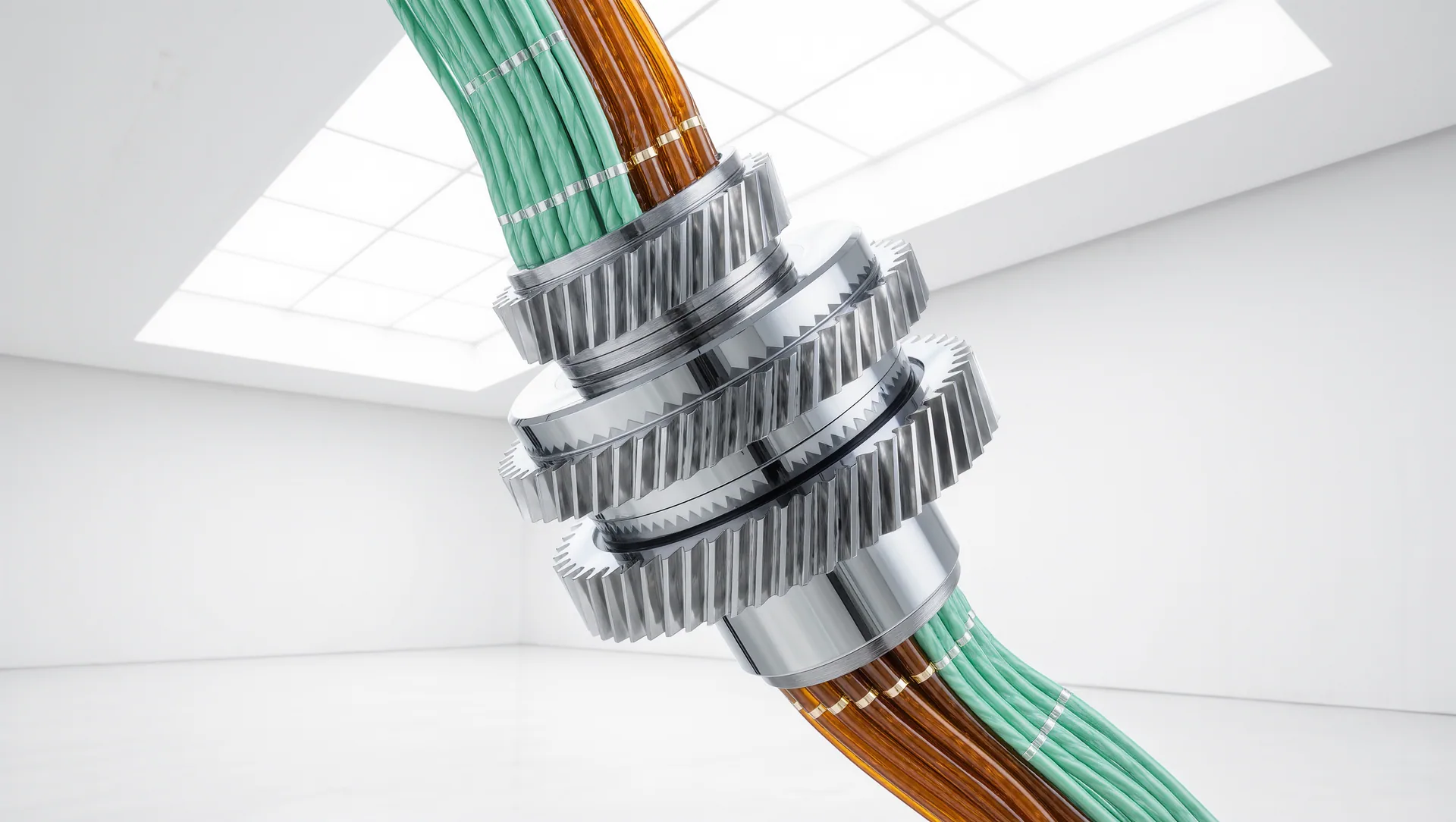
Buying an industrial robot usually means buying into a software world. The arm comes with its own controller, its own programming language and its own teach pendant, the handheld device used to program and move it. Technicians learn that system, programs are written for it, and spare parts come from one source.
This works well as long as a company stays with one maker. It becomes a burden when a second brand joins the floor, when mobile robots from another supplier must cooperate with the arms, or when a supplier changes its terms. Open platforms and shared standards promise a way out. They deliver part of what they promise.
This article explains what a robot platform is, how the open-source Robot Operating System fits in, and how companies can keep their options open without giving up support and safety.
What a robot platform includes
A robot platform is more than the machine. It covers the controller hardware, the operating software, the programming tools, the simulation environment and the interfaces to other systems. More and more often, it also includes apps, cloud services and accessory catalogs where grippers and cameras plug in with ready-made drivers.
Each layer creates a tie. Programs written in one maker's language do not run on another maker's controller. Accessory drivers built for one ecosystem need rework for the next. Training, documentation and spare parts pile up around a single brand. None of this is sinister. It is how vendors make their products easy to use and support, and it is also how they keep customers.
ROS as an open middle layer
The Robot Operating System, known as ROS, is the best-known open-source alternative. Despite its name, it is not an operating system. It is a collection of libraries, tools and conventions that run on top of a regular operating system, usually Linux. Its core idea is that a robot's functions run as separate programs that exchange messages in standard formats.
Because the formats are shared, a navigation module written for one mobile robot can run on another, as long as both supply the same kind of sensor and motion data. Large community projects cover motion planning for arms, navigation for mobile robots and simulation. Many manufacturers offer ROS drivers for their hardware. Many universities teach with it, so graduates often arrive knowing it.
The original ROS has been succeeded by ROS 2. The new version builds on the Data Distribution Service, an established standard for real-time communication, and was designed with security and multi-robot systems in mind. New projects should start on ROS 2. A consortium called ROS-Industrial works on making the tools fit for factory use.
What open platforms do not replace
ROS does not remove the robot maker's controller. In most industrial setups, the arm's own controller still handles motor control and, crucially, safety functions. ROS sends goals or paths, and the controller carries them out. Safety-rated stops, speed limits and zone monitoring stay in certified hardware and software, because ROS itself is not certified for safety functions.
Open software also shifts responsibility. With a vendor system, a company calls one hotline when something breaks. With a setup based on ROS, the integrator or the in-house team owns the combination of drivers, packages and versions. Community packages vary in quality and upkeep. Some are maintained by large teams, others by a single developer who has since moved on.
Open software lets you change the parts. It also makes you responsible for how they fit together.
Timing is another limit. Tight control loops need predictable timing, which general-purpose software stacks do not guarantee by default. Most factory projects therefore keep fast control in the vendor's controller and use ROS for planning, perception and coordination.
Standards that connect fleets and cells
Open source is only one route to interchangeable equipment. Industry standards define how systems talk to each other without forcing everyone onto the same software. Three are worth knowing:
- OPC UA, a widely used standard for machine communication, has a companion specification for robots that describes status, configuration and diagnostics in a common form.
- VDA 5050, developed by German automotive and machinery associations, defines how a central fleet manager sends jobs to mobile robots from different makers.
- Interoperability standards for mobile robots let fleets from several vendors share their positions and status, so they can avoid each other in the same building.
These standards do not make robots identical. They make it possible to plan, monitor and dispatch mixed fleets from one place. For many operators, that is the flexibility they need most.
Support for a standard is not a yes or no question, though. Vendors may implement only part of a specification, or add their own extensions on top. A pilot with two brands on the same fleet manager or the same plant system shows quickly how far the promised compatibility goes. It is far cheaper to learn this in a test area than after a full rollout.
How to keep switching costs low
A company does not have to choose between full openness and full dependence. It can decide where flexibility matters and buy accordingly. Before a purchase, it pays to ask a few questions. Does the robot offer documented interfaces for external control? Can programs and data be exported in readable form? Does the supplier support common standards for fleet and machine communication?
Internally, it helps to keep process knowledge outside any single robot program. Part data, positions and recipes can live in a central system and be passed to the robot, instead of being written into its code. A change of brand then means rewriting motion logic, not rediscovering the process.
Skills matter too. A team that knows only one maker's pendant is locked in, whatever the contracts say. Training some staff in general robotics concepts and in ROS gives a company room to choose its next robot on the merits.
Robot platforms will likely remain a mix of closed controllers and open layers above them. The practical goal is not independence from every vendor. It is the ability to change one part without starting over.
Questions and answers
Is ROS suitable for industrial production?
It is used in production, mostly for planning, perception and coordination, while the robot's own controller handles motion and safety. Projects need careful version management and a clear owner for the software stack. ROS 2 is the version to use for new work.
Can I program robots from different makers with one tool?
Partly. Offline programming and simulation tools often support several brands and translate programs into each maker's language. The translation is rarely perfect, so programs still need testing and adjustment on the real robot.
What does dependence on one robot vendor cost?
The cost shows up later, in prices for spare parts and expansions, retraining when switching brands and rewriting programs. It is hard to put a number on it in advance. Asking about interfaces, export options and standards before buying keeps those costs visible.
Does using open-source software void a robot's warranty?
Using the documented external interfaces normally does not, but modifying the controller itself can. Terms differ between makers, so warranty and support conditions should be checked before connecting third-party software. Safety approvals also need a review when the control logic changes.
Can mobile robots from different suppliers share one warehouse?
Yes, and it is becoming more common. Shared interfaces for fleet management and traffic coordination allow a central system to assign jobs and prevent conflicts. Each vendor must support the same standard, so this belongs on the requirements list from the start.
More from Robotics
All 115 stories
Robotics5 min read
Robotic Vehicles Work Best Off Public Roads: Mines, Ports, Farms
The driverless taxi gets the headlines, but most robotic vehicles doing daily work run in mines, container ports, warehouses and fields. Why closed sites came first, and…
Robotics4 min read
Robot Arms in the Design Studio: From Digital Model to Made Object
Architects, furniture makers and product designers now use industrial robot arms to mill, print, bend and stack. The machine changes what can be made, and also how…
Robotics6 min read
Packaging Robots: Why the Format Change Matters More Than Speed
A packaging robot that runs fast on one product is easy to buy. One that switches sizes, materials and pack counts without losing half a shift is harder to find, and…