
Smart Manufacturing in Older Plants: First Learn Why Machines Stop
Most factories mix machines from several decades. There, smart manufacturing starts not with AI but with a plain record of when each machine runs, stops and why.

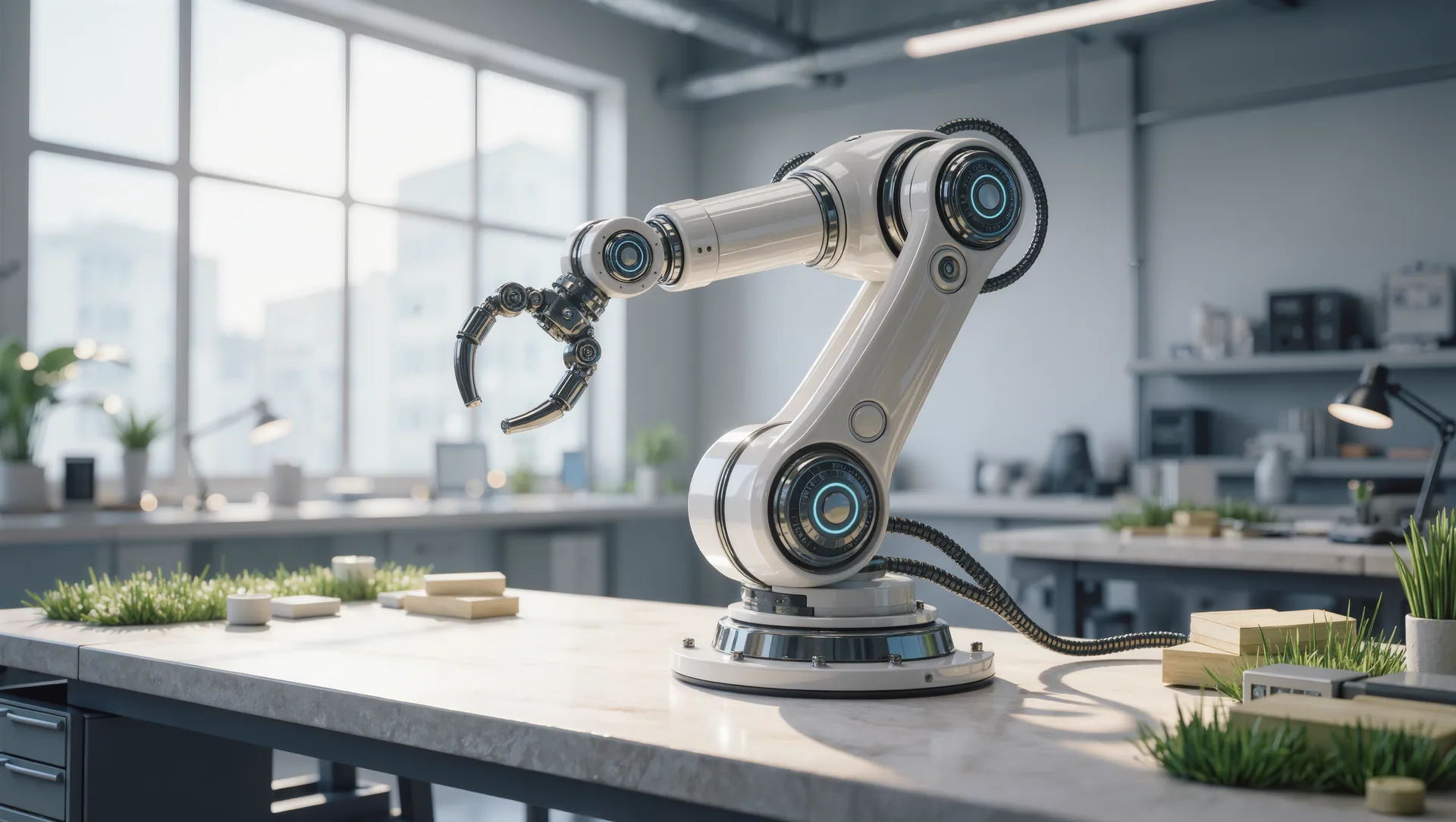
Brochures about smart manufacturing tend to show a brand new factory. Robots move in sync, screens glow on every wall and a digital model mirrors each machine. Few manufacturers start there. A typical plant runs presses, lathes and ovens bought over several decades, from different makers, with controllers that were never meant to talk to anything.
In such a plant, the most useful first step is surprisingly modest. It is a reliable record of when each machine runs, when it waits and when it stops, together with the reason. That sounds basic, yet many factories cannot answer the question with confidence. Their numbers come from shift notes, memory and a spreadsheet filled in at the end of the week.
This article follows that first step in an existing plant: how to collect machine data, what it reveals, what it costs in effort and where it leads once the foundation holds.
Why downtime data comes first
Every later idea in smart manufacturing depends on knowing the state of the machines. Scheduling software needs to know which machines are free. A maintenance model needs a history of stops and failures. Energy tracking needs to know when a machine idles. Without trustworthy status data, each of these projects builds on guesses.
Status data also pays off on its own. When a plant starts measuring, it usually finds that machines stand still more often than people thought. The cause is rarely one big breakdown. It is the sum of many small things: waiting for material, a missing tool, a slow changeover, a quality check that holds up the line. Each of these is invisible in a monthly output report, but obvious on a timeline.
Many plants summarize this data as overall equipment effectiveness, or OEE. The figure combines three questions. Was the machine available? Did it run at its intended speed? Were the parts good? OEE is useful for tracking one line over time. It is less useful for comparing different machines or plants, because the definitions behind it vary widely.
Getting data out of machines of every age
The technical route depends on the machine. Newer controllers often support standard protocols such as OPC UA or MQTT, which let software read status, counters and alarms directly. Many older controllers speak an older industrial protocol or a vendor's own format. Some machines have no usable interface at all.
For those, add-on hardware is often the practical choice. Common options include the following.
- A current sensor on the power cable, which shows whether the machine is running, idling or switched off.
- A signal taken from the stack light, the red, yellow and green lamp that already shows the machine's state.
- A counter on a sensor that detects each finished part or each stroke of a press.
- A small edge gateway that collects these signals and passes them to a central system.
Add-on sensors do not touch the machine's control logic. That makes them quick to install and less risky for machines still under warranty. Their limit is detail. A current sensor can tell that a machine stopped, but not why.
Reason codes decide whether the data is useful
The reason for a stop usually has to come from a person. When a machine halts, a screen next to it asks the operator to choose a cause: no material, tool change, setup, quality problem, breakdown. This is where many projects quietly fail.
If the list holds fifty reasons, operators pick the first one that fits or the one at the top. If the screen interrupts them during a hectic shift, they skip it. A few weeks later, the most common reason in the system is other, and the data says little. Plants that succeed keep the list short, use words from the shop floor and review it with operators every few months.
It also matters what happens to the answers. Operators enter reasons willingly when they see results, for example in a weekly meeting where the top causes are discussed and someone is assigned to fix one. When the data only travels to a management report, the effort feels like surveillance, and quality drops.
A smart factory is not the one that collects the most data. It is the one where someone acts on the reason a machine stopped yesterday.
Security once machines join the network
Connecting machines changes the security picture. Many factory controllers were designed for closed networks and lack basic protections such as encryption or proper passwords. Once they are reachable from the office network, an infected laptop or a careless remote access tool can reach the production line.
The usual answer is separation. Machine networks sit in their own zones, and data flows out through a controlled point instead of in through open doors. Remote access for machine builders runs through one monitored channel rather than a modem on each machine. Small plants rarely have specialists for this, so it is worth involving an outside expert before the first gateway goes live, not after an incident.
What it takes and what it costs
A first project covering a handful of critical machines can be modest in hardware cost. The larger effort is time. Someone has to map each machine, choose how to connect it, agree on the reason list and check the data against reality for the first weeks. Maintenance and production must both own the result, or it becomes an IT project nobody on the floor trusts.
Plants also need a home for the data. Some choose a manufacturing execution system, or MES, which manages orders, quality records and machine status in one place. Others start with lighter software and grow later. The right choice depends less on features than on whether the plant has people to configure and maintain it.
A useful rule is to start where the pain is clear. A bottleneck machine, whose stops hold up everything downstream, gives quick feedback. Gains there show up directly in output, which makes the next step easier to justify.
What a solid foundation makes possible
Once status data is reliable, the familiar ideas of smart manufacturing become realistic. Maintenance teams can link stops to the parts that failed and move toward planned repairs. Planners can schedule orders around real machine capacity rather than nominal figures. Quality data can be tied to the machine and the shift that produced each batch. Energy use can be measured per part, not just per month.
Later, the same data can feed simulations of the line, often called digital twins, or AI models that warn about drift. These tools are only as good as the history beneath them. That is the quiet lesson of smart manufacturing in older plants: the impressive steps come late, and they rest on a plain record of why machines stop.
Questions and answers
Do we need new machines to start with smart manufacturing?
Usually not. Most plants can connect existing machines with add-on sensors or by reading data from their controllers. New machines make the job easier, but replacing equipment only to get data rarely pays off.
What is OEE and should we use it?
OEE stands for overall equipment effectiveness and combines availability, speed and quality into one figure. It works well for tracking one machine or line over time, as long as the definitions stay fixed. Comparing OEE between plants is risky, because each site tends to calculate it a little differently.
How many stop reasons should operators choose from?
As few as still answer the questions that matter. Many plants start with a short list and add sub-reasons only for the most frequent causes. The list should use shop floor language and be reviewed with operators regularly.
Is smart manufacturing the same as Industry 4.0?
The terms overlap. Industry 4.0 began as a German industrial policy initiative and describes the broad idea of connected, data-driven production. Smart manufacturing is a common name for the same direction, especially in the United States, and is often used for day-to-day factory work.
Who should own a smart manufacturing project?
Production and maintenance should own it together, with IT supporting the networks and software. When the project sits only with IT, the data often lacks the context that makes it useful. When it sits only with production, security and upkeep tend to fall short.
More from Automation
All 142 stories
Automation4 min read
Logistics Automation Beyond the Warehouse: Bookings, Tracking, Bills
Robots get the attention, but much of the delay in logistics sits in the office: booking carriers, chasing status updates and checking freight invoices. Where automation…

Automation5 min read
Silent Failures: Monitoring Automations That Break Without an Error
The costliest automation failures raise no alarm. A job never starts, a file arrives empty, a run ends with zero records. How to watch for what should have happened, and…
Automation5 min read
Driverless Metros Came First: Automation in Rail and Public Transit
Long before robotaxis, some metro lines ran without drivers, while signal boxes, timetables and control rooms were automated step by step. What rail automation does, and…